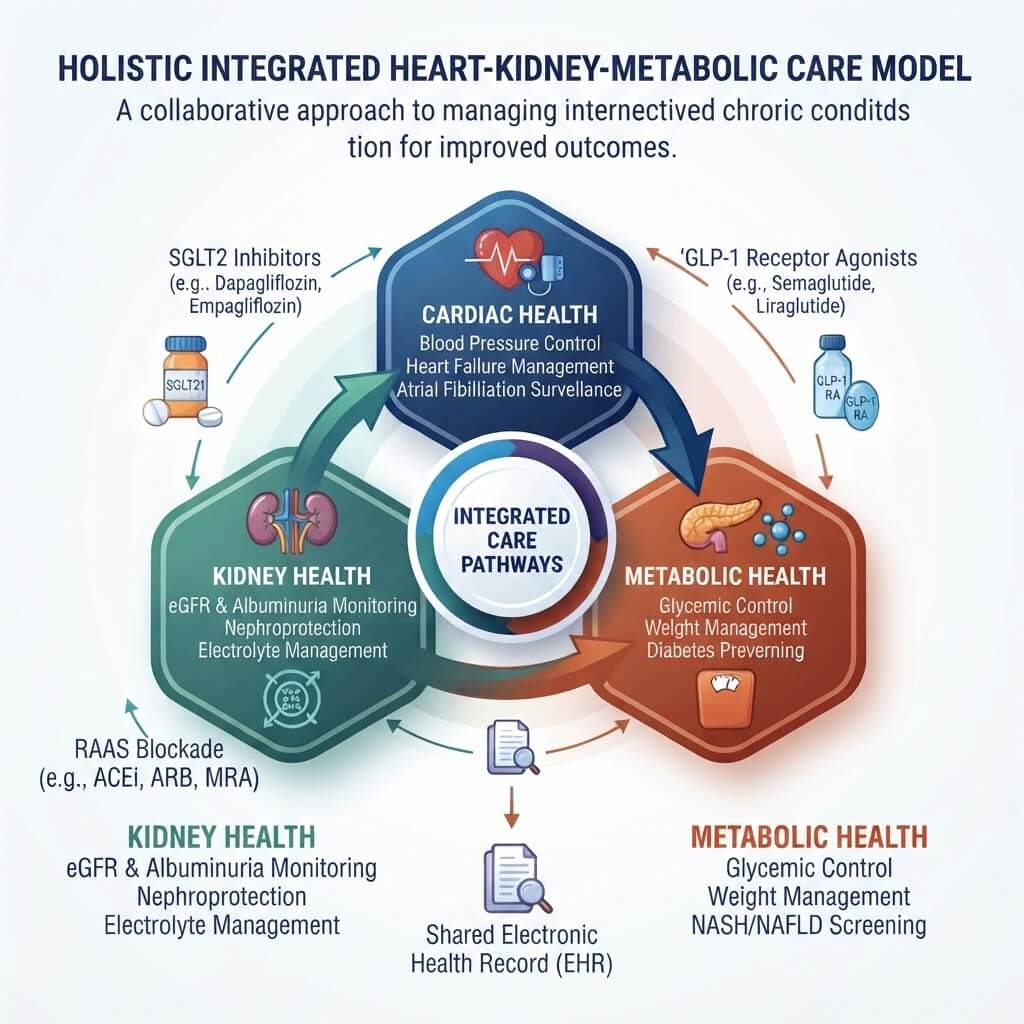
Moving away from fragmented, organ-isolated care, Academy Fellows outline a multidisciplinary clinical model uniting endocrinologists, cardiologists, and nephrologists to intercept Type 2 Diabetes, CKD, and cardiovascular disease early.
The scientific assembly devoted significant focus to the conceptual and clinical framework of Cardio-RenalMetabolic (CKM) syndrome. Rather than viewing Type 2 Diabetes Mellitus (T2DM), Chronic Kidney Disease (CKD), and Cardiovascular Disease (CVD) as distinct pathological entities, ACADMEDS champions the “Common Soil” paradigm. This model addresses the shared, underlying pathophysiological drivers of CKM syndrome—specifically metabolic dysfunction, insulin resistance, visceral adipose tissue inflammation (Adipo-IR), persistent low-grade systemic inflammation, oxidative stress, and progressive endothelial injury that simultaneously damages the coronary, renal, and systemic microvasculature.
Presenters contrasted this holistic strategy against conventional, organ-isolated clinical management. Fragmented care pathways frequently lead to siloed interventions, polypharmacy, delayed clinical escalation, and elevated patient mortality. The Academy reviewed the formalized CKM staging framework (Stages 0 through 4), advocating for early, aggressive intervention utilizing validated disease-modifying pharmacotherapies. These include Sodium-Glucose Cotransporter-2 (SGLT2) inhibitors, Glucagon-Like Peptide-1 (GLP-1) receptor agonists, non-steroidal mineralocorticoid receptor antagonists (such as Finerenone), and emerging targeted molecular therapies like Inaxaplin for APOL1-mediated kidney disease.
To operationalize this paradigm shift, ACADMEDS calls upon tertiary and secondary healthcare institutions across Nigeria to establish unified, multidisciplinary CKM clinics. These specialized centers must integrate endocrinologists, cardiologists, nephrologists, primary care physicians, clinical pharmacologists, and registered dietitians into co-located care teams. Furthermore, the Academy recommends mandatory primary care screening protocols—encompassing regular tracking of Body Mass Index (BMI), waist circumference, blood pressure, fasting plasma glucose, comprehensive lipid profiles, estimated Glomerular Filtration Rate (eGFR), and urine Albumin-to-Creatinine Ratio (UACR)—to intercept Stage 1 and Stage 2 CKM syndrome long before irreversible target-organ damage occurs.